Choosing the correct tooling concept begins with understanding the profile itself. For manufacturers comparing extrusion die types in UAE production, the most important distinction is whether the aluminum profile is solid, hollow or semi-hollow.
These classifications are not simply labels. They influence die construction, metal-flow strategy, structural requirements, manufacturing complexity and the way the tooling performs on the press.
What Are the Main Aluminum Extrusion Die Types?
Direct answer: Aluminum extrusion profiles are generally grouped into three categories: solid, hollow and semi-hollow. Solid profiles contain no enclosed void, hollow profiles contain one or more fully enclosed voids, and semi-hollow profiles partially enclose a void in a way that creates more complex tooling and flow requirements than a conventional solid section.
The Aluminum Extruders Council uses the same broad classification and emphasizes that profile geometry strongly influences extrusion design decisions.
Solid Extrusion Dies
A solid profile has no completely enclosed internal void. Typical examples include bars, angles, channels and many structural or architectural sections.
Because the profile does not require a mandrel to create an enclosed internal cavity, the tooling concept is generally more direct than for a hollow profile. However, “solid” does not automatically mean simple. A solid profile may still include thin walls, deep features, uneven mass distribution or several openings in a multi-cavity die.
For these profiles, bearing design and metal-flow balance remain critical. If one part of the section moves faster than another, the extrusion may twist, bow or move outside dimensional requirements.
Hollow Extrusion Dies
A hollow profile contains at least one fully enclosed void. Tubes, box sections and many window, door, transport and industrial profiles fall into this category.
Creating the internal void requires tooling that divides the aluminum flow and then brings it back together around a mandrel. Depending on the application, hollow tooling may use porthole, bridge or spider-type concepts.
This makes hollow-die engineering more demanding because the designer must control several factors at the same time:
- Metal distribution through the ports
- Support for the mandrel and bridges
- Welding of the divided metal streams
- Balanced exit speed around the complete profile
- Tool strength under extrusion pressure
- Dimensional stability of the internal and external surfaces
The final design has to achieve the profile geometry while also maintaining enough structural strength for reliable production.
Semi-Hollow Extrusion Dies
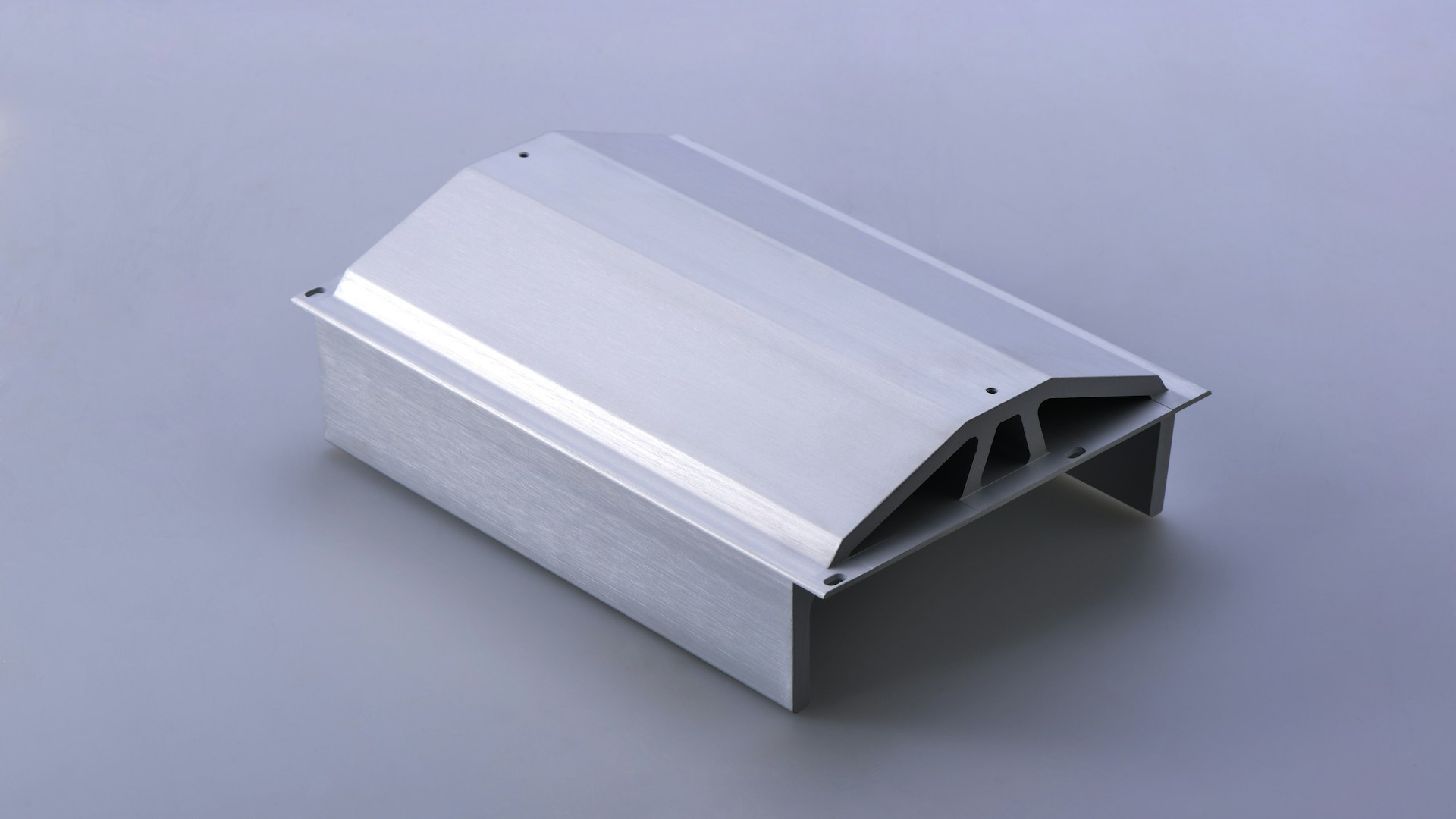
A semi-hollow profile partially encloses a void but contains an opening or gap. At first glance, some semi-hollow sections can look similar to solid channels. The difference becomes important when the geometry creates a narrow opening and a long, unsupported tongue-like feature in the die.
This condition can make the tool more sensitive to stress and deflection. The die must be engineered so that the tongue remains sufficiently supported while still allowing the aluminum to fill the profile correctly.
For that reason, classifying a profile correctly before quoting or manufacturing the die helps the engineering team evaluate the appropriate tooling concept and production risk.
Why Profile Geometry Changes the Die Design
The number of voids is only one part of the decision. Wall thickness, symmetry, extrusion ratio, alloy, profile size, dimensional tolerances and press conditions all influence the final die design.
For example, a relatively simple hollow profile may be easier to control than an extremely asymmetric solid profile with large differences in wall thickness. Similarly, a semi-hollow section with a narrow gap can place significant stress on a die tongue even though the profile is not technically fully hollow.
This is why experienced die engineering starts with the drawing and production requirements rather than selecting a standard tool concept first.
Solid vs. Hollow vs. Semi-Hollow: What Changes in Production?
The profile category can affect several practical areas of extrusion production:
- Tool complexity: Hollow and difficult semi-hollow profiles normally require more complex die construction.
- Metal-flow control: More complex geometry increases the importance of feeder, port and bearing design.
- Tool strength: Bridges, mandrels and narrow tongues must withstand repeated extrusion loading.
- Correction strategy: Different die types may require different approaches when balancing profile flow.
- Maintenance: Critical surfaces and highly loaded features need careful inspection over the die lifecycle.
Where Multi-Cavity Tooling Fits In
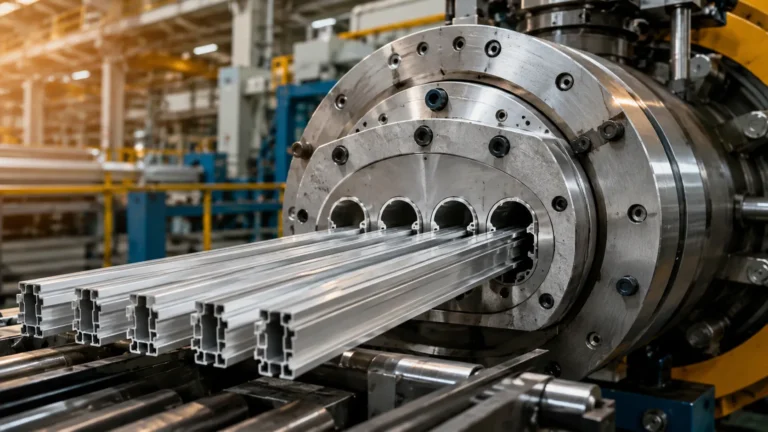
Multi-cavity does not replace the solid, hollow or semi-hollow classification. It describes a die that produces more than one profile simultaneously. A multi-cavity tool can therefore be designed for suitable profile geometries when press capacity, flow balance and production volume justify the approach.
Phoenix Middle East’s complex and multi-cavity die solutions focus on applications where standard tooling is not sufficient and where careful flow control becomes especially important.
What Information Is Needed Before Designing the Die?
Direct answer: The profile drawing is the starting point, but reliable die engineering also depends on understanding the alloy, tolerances, press conditions, required output and any known production challenges.
For a new profile, useful information typically includes:
- Final profile drawing and dimensions
- Alloy and temper requirements
- Critical tolerances
- Press size and relevant tooling limits
- Expected production volume
- Surface-quality requirements
- Any previous tooling or extrusion difficulties
With this information, engineers can determine the most appropriate die concept and evaluate how metal flow, structural support and manufacturability should be managed.
Choosing the Right Extrusion Die Type for UAE Manufacturing
There is no single “best” extrusion die type. The correct choice is the one that matches the geometry and production requirements of the profile.
For straightforward solid sections, the tooling architecture may be relatively direct. Hollow and demanding semi-hollow profiles require more attention to internal support, metal distribution and structural strength. Complex or high-volume applications may introduce additional requirements such as multi-cavity production.
Phoenix Middle East’s custom aluminum extrusion dies are engineered around the individual profile rather than a one-size-fits-all tooling approach.
From Profile Classification to Production Performance
Understanding whether a profile is solid, hollow or semi-hollow gives engineers the foundation for selecting the correct tooling strategy. From there, the design must account for flow, strength, tolerances, alloy behavior and press conditions.
For UAE extrusion manufacturers, making these decisions correctly at the engineering stage can support more predictable commissioning, consistent profile quality and a better-controlled tooling lifecycle.